One Perfect Piece: Why a Single Investment Outweighs a Closet Full of Compromises
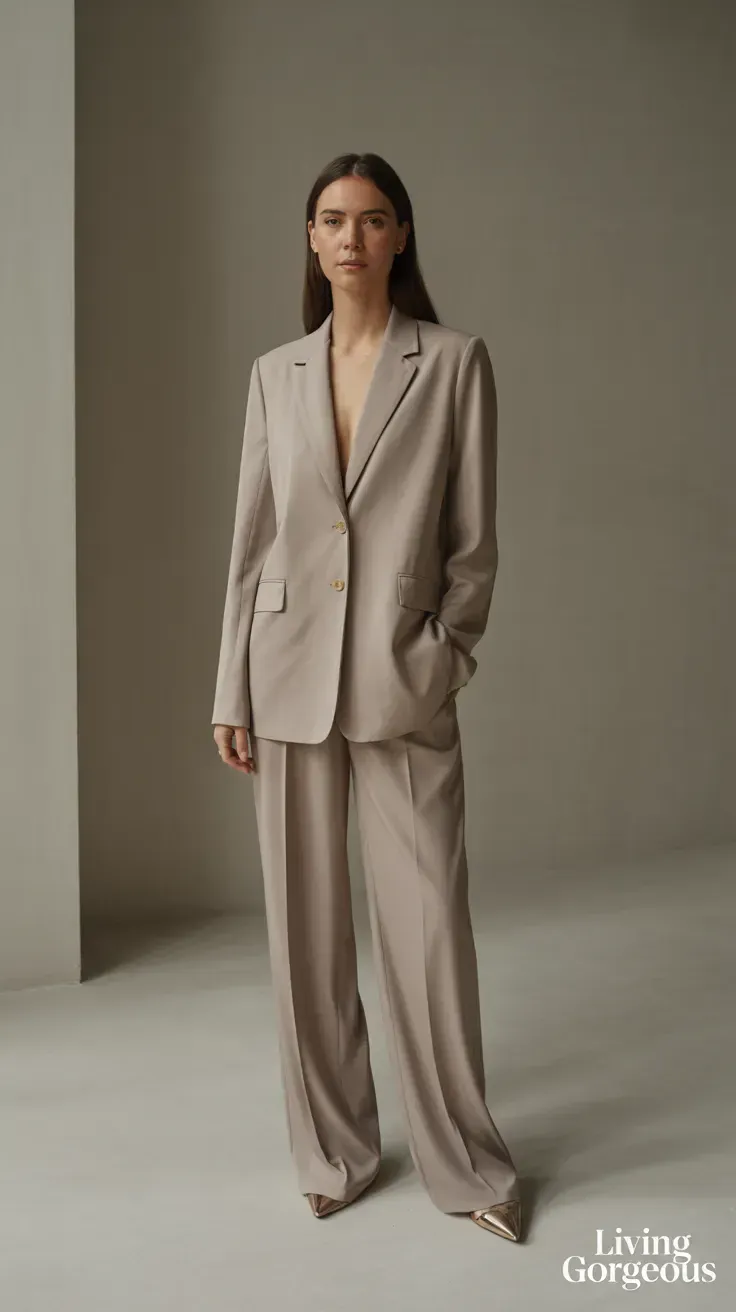
Photo: luxury minimalist wardrobe single tailored blazer investment fashion editorial, via www.livinggorgeous.com
There is a particular kind of clarity that comes from standing before a well-edited closet. Every item earns its place. Nothing hangs there out of obligation or impulse. For many American consumers, however, the closet tells a different story — one of weekend sales, trend-chasing, and a persistent sense that no individual piece ever quite satisfies. The problem is rarely a shortage of clothing. It is a surplus of the wrong kind.
At Suha Atiyeh, contemporary design is approached as a discipline of intention. The same philosophy that guides the construction of a collection — where every seam, silhouette, and fabric is deliberate — should guide the way a wardrobe is assembled. And that philosophy begins with a single, uncomfortable question: would you rather own five pieces that almost work, or one that works completely?
The True Cost of the Mediocre Five
Fast fashion has trained consumers to think in terms of volume. A $30 blouse feels like a low-stakes decision. Five of them, however, represent $150 spent on garments that may fade after six washes, lose their shape by the second season, or sit unworn because they never quite paired well with anything else in the wardrobe.
The math is rarely examined this way. When a $250 structured blazer in Italian wool crepe lasts seven years and transitions seamlessly from a client presentation to a dinner in Manhattan, its cost-per-wear drops to almost nothing. The $30 blouse, worn twice and discarded, costs considerably more by comparison. Investment dressing is not a luxury reserved for the wealthy — it is a practical recalibration of how value is measured.
Beyond economics, there is the matter of presence. A garment constructed with care announces itself differently. The weight of a well-woven fabric, the precision of a well-set shoulder seam, the way a considered silhouette holds its shape through a full day — these qualities are felt, both by the wearer and by those around her.
What Makes a Piece Worth the Investment
Not every expensive item qualifies as an investment piece, and not every investment piece carries a designer price tag. The distinction lies in three qualities: construction integrity, material longevity, and stylistic range.
Construction integrity refers to how a garment is made. French seams, reinforced stress points, and hand-finished hems are indicators of a manufacturer who expects the piece to last. When evaluating a potential investment, turn the garment inside out. What you find there tells you more than the label on the outside.
Material longevity considers how a fabric performs over time. Natural fibers — silk, wool, cashmere, quality cotton — generally age more gracefully than synthetic blends. A fine merino wool coat, properly stored, will outlast a polyester alternative by a decade or more. It will also press better, breathe better, and carry itself with a drape that synthetics rarely replicate.
Stylistic range is perhaps the most underappreciated criterion. An investment piece should not demand a specific occasion. A wide-leg trouser in a neutral, elevated fabric — think a deep charcoal or a warm ivory — can anchor a boardroom look in the morning and shift, with a simple exchange of footwear and accessories, into something entirely appropriate for an evening out. Versatility is not a compromise of character; it is a sign of sophisticated design.
Pieces That Consistently Justify Their Price
Certain categories have proven, across seasons and style cycles, to deliver exceptional return on investment.
A tailored coat in a neutral tone remains one of the most defensible expenditures in contemporary dressing. Worn over everything from denim to eveningwear, a coat in camel, charcoal, or deep navy serves as the outermost expression of personal style. It is seen more consistently than almost any other garment. Spending well here — on structure, on fabric weight, on lining quality — is never a miscalculation.
Footwear with architectural intent is another category where quality compounds over time. A pair of leather ankle boots or structured loafers, resoled as needed, will outlast six pairs of trend-driven alternatives. The silhouette of a well-made shoe also anchors an outfit in a way that inexpensive footwear rarely achieves.
For those who wear them regularly, a silk or high-quality blouse in a considered cut offers remarkable versatility. Unlike synthetic alternatives, silk responds to the body with a fluidity that reads as effortless elegance. It layers, it tucks, it stands alone — and maintained properly, it does so for years.
Styling an Investment Piece Across Seasons
The mark of a truly exceptional piece is its ability to evolve with the season without requiring a wardrobe overhaul around it. Consider a structured blazer in a warm ivory boucle. In autumn, it layers over a turtleneck and tailored trousers. In spring, it pairs with a slip dress and minimal sandals. In winter, it functions beneath an overcoat as a sophisticated mid-layer. The piece itself does not change — the conversation it enters does.
This kind of styling flexibility is worth mapping out before a purchase is made. If a piece can be envisioned in at least three distinct seasonal contexts within your actual life and routine, it has earned serious consideration.
A Different Kind of Shopping
Adopting an investment mindset requires a shift in the rhythm of acquiring clothing. It means shopping less frequently, with greater purpose. It means resisting the seasonal urgency that retail calendars impose and instead asking whether a piece will still feel right two years from now. It means, occasionally, waiting — saving deliberately for something that genuinely merits the expenditure.
This is not deprivation. It is the opposite. A wardrobe built on fewer, better things offers more freedom, not less. Getting dressed becomes a considered act rather than a daily negotiation with a closet full of near-misses.
At Suha Atiyeh, this philosophy is woven into every collection — the belief that a single garment, designed and constructed with complete intention, is worth more than any number of pieces assembled without it.