Five Pieces, Infinite Possibilities: The Wardrobe Math That Actually Works
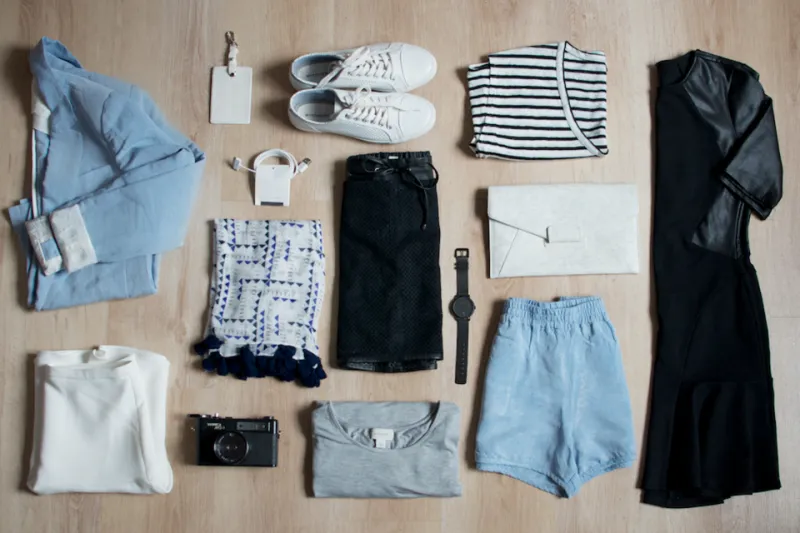
Photo: Geneva Vanderzeil apairandasparediy.com, CC BY 2.0, via Wikimedia Commons
There is a particular frustration that comes from standing in front of a full closet and feeling, genuinely, that you have nothing to wear. It is not a shortage of clothing. It is a shortage of intention. The wardrobe that produces ten distinct, confident outfits from five core pieces is not built by accident — it is designed, the same way a collection is designed, with a clear internal logic that makes every component work in conversation with the others.
This is the methodology at the heart of what we call wardrobe architecture: the practice of selecting foundational items not individually, but as a system.
The Foundational Five: What Qualifies
Before discussing how pieces interact, it is worth establishing what makes an item worthy of a foundational role in the first place. A true core piece carries three essential qualities: it fits your body with precision, it occupies a neutral or highly adaptable position in your color story, and it crosses at least two lifestyle contexts without alteration.
For most American wardrobes, a practical foundational five might look something like this: a tailored trouser in a mid-tone neutral, a structured blazer, a fluid silk or silk-adjacent blouse, a clean-lined knit, and a versatile dress that reads both day and evening depending on how it is styled. These are not prescriptions — they are archetypes. Your specific five will reflect your actual life, your city, your professional context, and your personal aesthetic. The point is not the exact items but the relational logic between them.
Each piece must be able to speak to at least three of the other four. If it only pairs with one or two, it is not a foundation piece — it is a statement piece, and those belong to a different wardrobe conversation entirely.
The Cross-Category Thinking That Changes Everything
Most people mix within categories: trousers with blouses, knits with trousers, blazers over dresses. That kind of pairing is familiar and functional, but it is also where the math stops growing. The real multiplication happens when you begin thinking across categories — when the blazer becomes a top, when the dress becomes a layering piece worn under the knit, when the trouser is styled with the dress as a skirt-and-trouser combination.
This is not experimental dressing for its own sake. It is a deliberate expansion of the vocabulary each piece carries. A blazer worn closed and belted over a slip dress reads entirely differently than the same blazer open over a knit and trouser. Same garment, same day, different outfit. That is the remix effect in practice.
When you begin mapping your five pieces this way — asking not just "what does this go with" but "how many distinct silhouettes can this create" — the outfit count climbs quickly. Two pieces in combination give you ten possible pairings. Introduce a third as a layering variable, and those combinations deepen further. Add intentional accessories as multipliers rather than afterthoughts, and you have a working wardrobe that rivals one three times its size.
Seasonal Adaptability Without Starting Over
One of the most undervalued qualities of a well-chosen foundational piece is its ability to shift across seasons without being replaced. The trouser that works in September with a silk blouse and mules works equally well in January with a merino turtleneck and ankle boots. The dress that functions as a standalone piece in July becomes a layering base in November.
This seasonal continuity is only possible when pieces are selected with fabric weight and silhouette versatility in mind. Lightweight wools, medium-weight silks, and structured yet breathable cottons tend to travel across the calendar more gracefully than fabrics engineered for a single season. When building your foundational five, consider each item's year-round utility as a non-negotiable criterion rather than a bonus.
The Color Architecture Beneath It All
No conversation about wardrobe multiplication is complete without addressing color. The reason a five-piece wardrobe either explodes into dozens of combinations or collapses into a handful of repetitive looks comes down almost entirely to how the colors relate to one another.
A cohesive color architecture does not mean everything is the same shade. It means every piece shares a common undertone, a similar level of saturation, or a deliberate tonal relationship that allows them to be combined without visual conflict. Warm neutrals live together. Cool-toned pieces find their own harmony. When you introduce a single accent color — a deep burgundy, a cobalt, an olive — it should be able to touch every other piece in the five without creating dissonance.
If you find that two pieces in your foundational collection resist each other, the problem is almost always color architecture. This is where many wardrobes quietly fail: beautiful individual pieces that simply will not speak to one another because they were chosen in isolation rather than as a system.
Putting the Math Into Practice
Begin with your five pieces laid out physically — on a bed, a clean floor, or a garment rack. Start pairing them in every combination of two, then three. Photograph each combination. You will begin to see patterns: certain pieces emerge as anchors that work with nearly everything, while others reveal themselves as more conditional. Note which combinations feel genuinely wearable and which feel forced.
From there, introduce one variable at a time: a shoe change, a belt, a layer added or removed. Document how each variable shifts the register of the outfit — from casual to polished, from day to evening, from understated to intentional. What you are building is a personal lookbook, and more importantly, a map of your own wardrobe's logic.
This exercise rarely takes more than an afternoon, and the clarity it produces tends to last far longer than any shopping trip. When you can see, visually and concretely, that five considered pieces produce ten or more genuinely distinct outfits, the impulse to accumulate more begins to quiet. The wardrobe becomes something curated rather than collected — and that distinction, ultimately, is where personal style begins.