Dressed on Repeat: The Quiet Confidence Behind Wearing the Same Outfits Again and Again

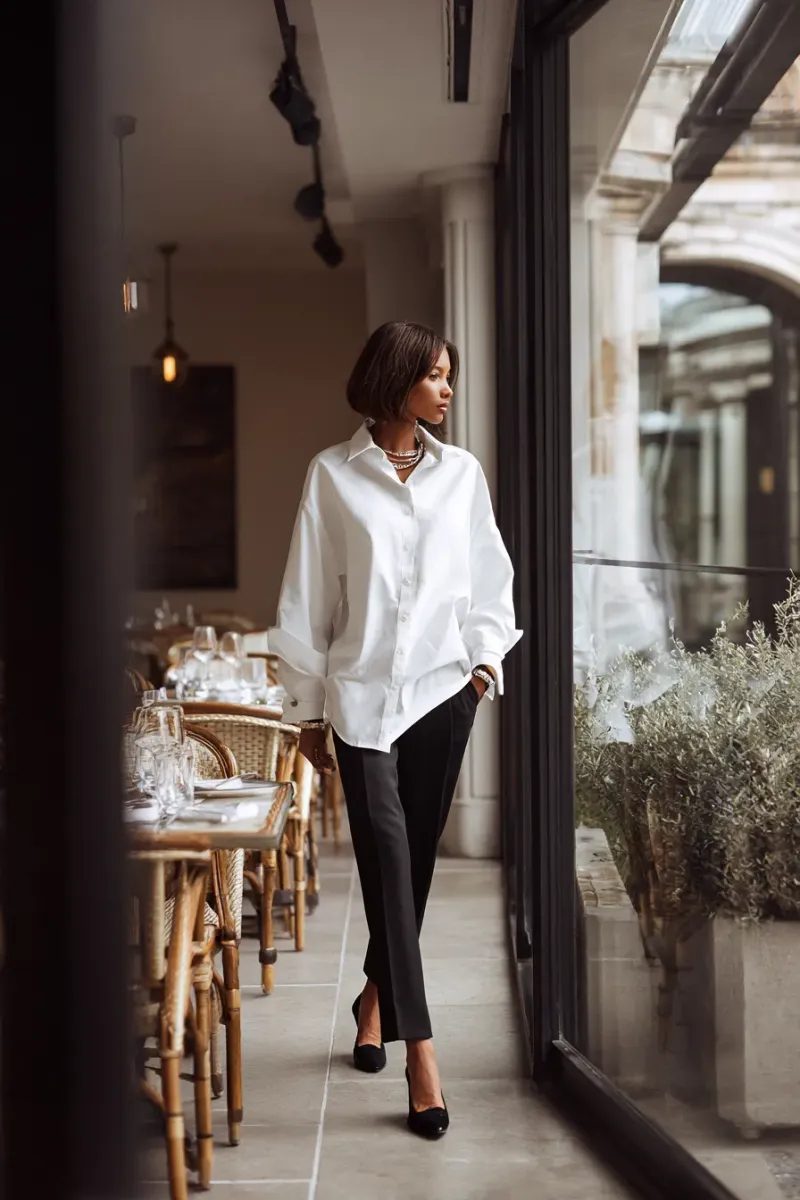
Photo by Photo by Vitaly Gariev on Unsplash on Unsplash
There is a persistent myth embedded in the culture of American fashion: that variety signals style. That the person who arrives at every occasion in something different, something fresh, something they have never been seen in before, is the one who truly understands how to dress. This myth has been aggressively reinforced by fast fashion's relentless production cycles, by social media's appetite for novelty, and by an industry that profits handsomely from convincing us that last season's silhouette is already a liability.
But consider the designer who wears a version of the same black turtleneck for decades. The creative director photographed in the same structured blazer at every industry event. The CEO who rotates through three impeccably tailored suits with the precision of someone who has decided, once and for all, that this question is settled. These are not people who have given up on dressing. They are people who have arrived at something most of us are still searching for: a genuine signature.
What Repetition Actually Communicates
When you repeat an outfit — not out of laziness or limited resources, but out of deliberate choice — you send a signal that is far more sophisticated than novelty ever could. You communicate that you know yourself. That you have done the internal work of understanding what belongs on your body, what aligns with your values, and what requires no further deliberation. In a culture obsessed with options, that kind of certainty reads as deeply authoritative.
Psychologists have long noted that decision fatigue is a genuine cognitive burden. The more choices we make throughout a day, the less mental bandwidth we have for the decisions that actually matter. Getting dressed, for many people, consumes a surprising amount of that bandwidth — particularly when the wardrobe is full of items that don't quite work together, pieces purchased in moments of optimism that never quite translated into real outfits. The personal uniform sidesteps this entirely. It does not eliminate style; it concentrates it.
The Cultural Shift Already Underway
Across American cities — from the design studios of New York to the creative offices of Los Angeles — a quieter approach to dressing has been gaining traction for years. It is not minimalism in the austere, trend-driven sense that dominated a certain era of fashion blogging. It is something more considered: a deliberate curation of a small number of outfits that work exceptionally well, worn with confidence and without apology.
This shift is, in part, a response to the excesses of fast fashion. A generation that grew up buying and discarding at an unprecedented rate is now reassessing. There is a growing recognition that a closet full of options is not the same as a wardrobe with intention — and that the former often produces more anxiety than the latter ever resolves. The personal uniform, in this context, is not a retreat from fashion. It is a more sophisticated engagement with it.
Designing Your Own Signature Rotation
Building a personal uniform is not about wearing the same item every single day in a literal sense. It is about identifying a small collection of outfits — perhaps three to five complete looks — that represent you at your most confident, most considered, and most comfortable. These are the combinations that require no adjustment once you are dressed, that photograph well without effort, and that you reach for instinctively on the days when you need to be fully present for something that matters.
Begin by looking at what you already return to. Most people, if they examine their habits honestly, will find that they wear roughly twenty percent of their wardrobe eighty percent of the time. The pieces that make up that twenty percent are telling you something. They are the foundation of a uniform that already exists in embryonic form.
From there, the work is refinement. Identify the silhouettes that consistently serve you — the cut of trouser that lengthens your line, the jacket that provides exactly the right amount of structure, the color palette that requires no second-guessing. Invest in those pieces at a quality level that rewards repetition. A garment worn weekly needs to be built for that frequency. Fabric matters. Construction matters. The way a seam holds after a hundred wearings matters in a way that it simply does not for something worn once.
The Distinction Between Repetition and Stagnation
There is an important distinction to draw here, and it is one that separates the personal uniform from simple inertia. Stagnation is wearing the same clothes because you have stopped paying attention. The personal uniform is wearing the same clothes because you have paid more attention than most people ever will.
The uniform does not preclude evolution. It simply slows the pace of change to something deliberate rather than reactive. You might refine a silhouette as your taste deepens. You might introduce a new color after years of working in neutrals. You might retire a piece when it has genuinely run its course and replace it with something that represents a considered upgrade. This is a living practice, not a fixed rule.
What it does preclude is the kind of impulsive acquisition that leaves a wardrobe cluttered with evidence of every passing trend you briefly found appealing. The uniform demands a higher standard of entry. A new piece must genuinely earn its place within the rotation, or it does not belong there at all.
Style Mastery as Reduction, Not Accumulation
The most enduring lesson of a truly considered wardrobe is that style, at its highest expression, is a practice of reduction rather than accumulation. The designer who has worn the same essential silhouette for twenty years is not someone who ran out of ideas. They are someone who found the right answer and had the discipline to stop looking for another one.
This is the quiet confidence that outfit repetition actually signals — not a lack of imagination, but an abundance of self-knowledge. In a fashion landscape that profits from your uncertainty, choosing a signature and returning to it is, in its own way, a radical act. It declares that you have already arrived at the answer, and that the question no longer requires your daily attention.
That is not the absence of style. That is its fullest expression.