The Radical Act of Stillness: Why Dressing Without Trends Is the Boldest Statement You Can Make
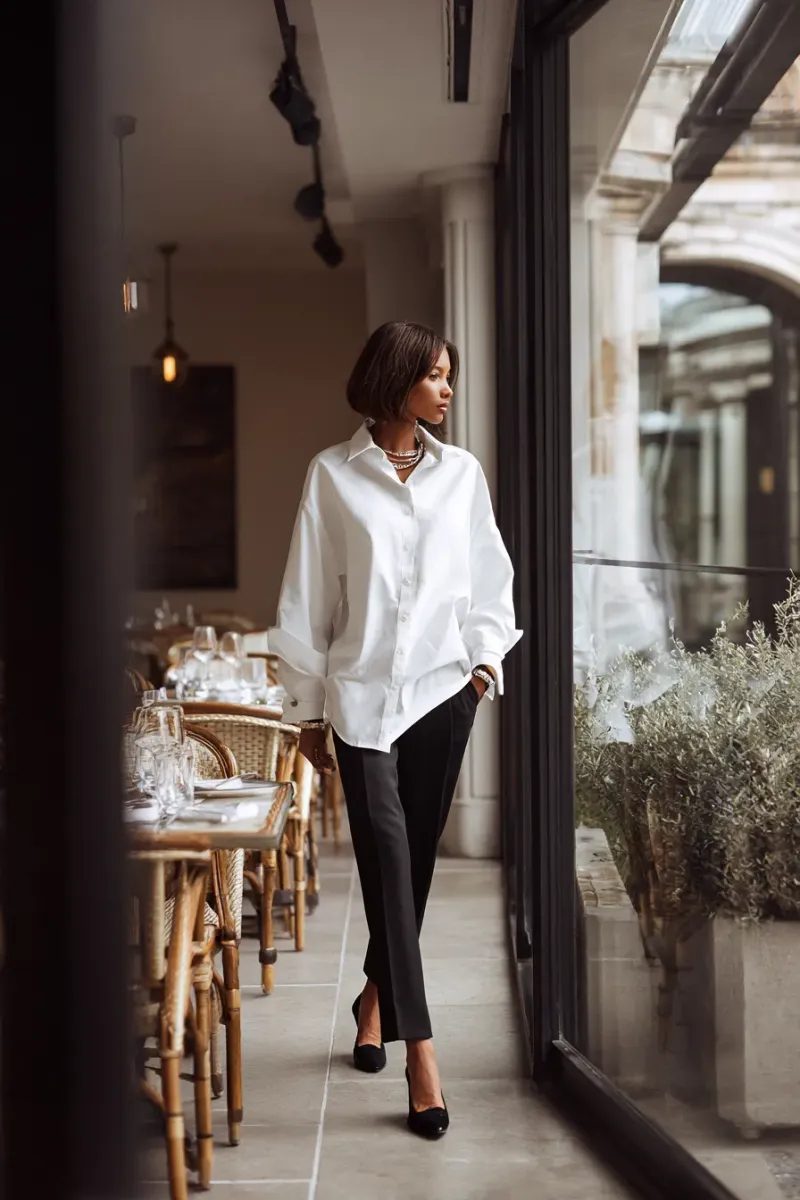
Photo: minimalist woman fashion editorial neutral tones simple elegant clothing, via stylevibesdaily.com
The Noise We Have Learned to Call Style
Open any social feed on a given morning and the message is immediate: there is always something new to want. A micro-trend born on a Tuesday is declared essential by Friday, then quietly retired the following month. The cycle is relentless, and for those who engage with fashion seriously, it can begin to feel less like inspiration and more like obligation.
Yet somewhere beneath all of that noise, a quieter conversation has always been happening. It belongs to the women who return to the same impeccably cut trouser season after season. To the men who have worn the same silhouette for a decade not because they stopped paying attention, but precisely because they never stopped. These are the people who look, in the truest sense, like themselves — and that is far rarer, and far more arresting, than looking like this month.
What We Mean When We Call Something 'Boring'
The word boring in fashion is almost always a dismissal. It implies a failure to participate, a lack of imagination, an absence of effort. But spend time with truly considered dressing and you begin to understand that what reads as boring on the surface is frequently the result of extraordinary discipline.
A white shirt, worn without apology, pressed to a precise crispness, tucked into a straight-leg pant in a shade of stone or navy — this is not an absence of a point of view. It is an entire philosophy compressed into two garments. The wearer has decided what matters. They have edited ruthlessly. They have refused to perform.
That refusal is not passive. In a culture that equates visibility with value, choosing understatement is an act of genuine courage. It requires a level of self-knowledge that trend-chasing, by design, never demands. When you wear the newest thing, the garment does the talking. When you wear something quiet with complete conviction, you do.
The Design Literacy Behind Restraint
At Suha Atiyeh, the collections are built on a foundational belief: that true design is not decoration. It is architecture. The most enduring pieces in any well-curated wardrobe share a common quality — they have been stripped of everything unnecessary. What remains is structure, proportion, and an almost austere attention to material.
This is precisely the vocabulary that the most design-literate dressers speak fluently. They understand that a lapel's width communicates something. That the drape of a fabric tells a story before a single word is spoken. That color, when chosen with restraint rather than reaction, carries a kind of authority that a statement print rarely achieves.
To dress this way requires studying the language rather than simply repeating the phrases you hear most often. Trends offer phrases. Personal style offers fluency.
Why the American Context Makes This Harder — and More Necessary
In the United States, fashion has long been tethered to aspiration in a very particular way. Newness signals success. The latest silhouette signals relevance. There is enormous cultural pressure, especially in cities like New York, Los Angeles, and Chicago, to signal that you are current — that you are in the room in every sense of the phrase.
This makes the choice to dress simply, deliberately, and without reference to the immediate moment feel almost countercultural. And perhaps it is. When the dominant language of a culture is novelty, fluency in permanence becomes its own form of radicalism.
The women who have always understood this — those whose wardrobes are built on a handful of exceptional pieces worn across years, not seasons — are not behind. They are, in the most precise sense, ahead. They have already arrived at the destination the rest of the fashion conversation is perpetually chasing.
Presence Over Performance
There is a distinction worth drawing carefully here. Rejecting trends does not mean rejecting fashion. It does not mean indifference to beauty, to craft, or to the genuine pleasure of dressing well. It means relocating the source of that pleasure from external validation to internal clarity.
When a garment is chosen because it aligns with who you actually are — not who the current season suggests you might want to be — it is worn differently. The body settles into it. The posture shifts. There is an ease that cannot be manufactured, and that ease is, ultimately, what makes someone magnetic to observe.
This is the paradox at the heart of understated dressing: the less a garment demands attention, the more attention its wearer commands. Presence is not manufactured through volume or novelty. It is the natural result of alignment — of a person and their clothing existing in genuine conversation rather than competing monologues.
Building a Wardrobe That Has the Courage of Its Convictions
If this philosophy resonates, the practical question becomes: how does one actually build a wardrobe around stillness rather than momentum?
The answer begins with identifying what you have always returned to. Not what you have been drawn to in a store window or on a screen, but what you have reached for, again and again, because it simply felt right. Those pieces are data. They are telling you something about your actual aesthetic — not the aesthetic you perform, but the one you inhabit.
From there, the work is one of subtraction rather than addition. It means asking, before any purchase, whether a piece belongs to the wardrobe you are building or merely to the moment you are currently moving through. It means being willing to wear the same beautifully made coat for five years without apology. It means understanding that quality and intention, worn consistently, constitute a signature far more powerful than any trend ever could.
The Most Radical Closet Is the One That Needs Nothing
Ultimately, the courage to dress without trends is the courage to need nothing from fashion except what it has always genuinely offered: the opportunity to meet the world as yourself, fully and without compromise.
That is not boring. That is, in every sense that matters, extraordinary.