The Architecture of Ease: Designing a Closet That Works With Your Brain, Not Against It
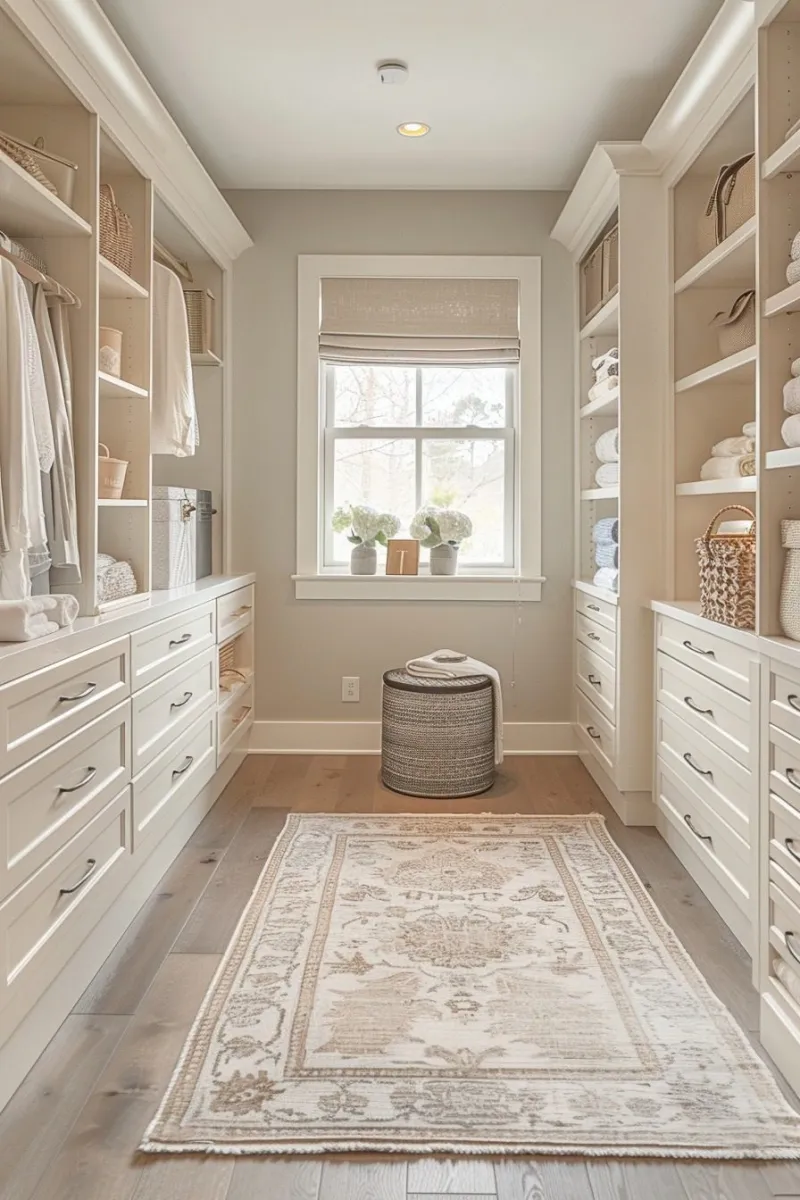
Photo: organized minimalist walk-in closet with color coordinated clothing neutral tones, via www.remodelormove.com
Most mornings, the closet door opens to a quiet kind of chaos. Garments crowd the rail. Colors compete. The decision of what to wear—seemingly simple—arrives before coffee, before clarity, before the mind has fully settled into the day. For many, this moment is not energizing. It is depleting.
What if the problem is not your wardrobe, but the way it is organized?
The relationship between physical environment and mental state is well documented. Cognitive scientists have long understood that the number of decisions a person faces in a given day directly affects the quality of those decisions over time—a phenomenon often referred to as decision fatigue. Your closet, if left unexamined, may be one of the most consistent contributors to that fatigue. And yet, with deliberate design, it can become the opposite: a space that replenishes rather than depletes.
Why the Brain Responds to Visual Order
The human brain processes visual information before language. Before you consciously identify a blouse or a pair of trousers, your nervous system has already registered the density, color temperature, and spatial arrangement of everything in view. A cluttered closet does not simply look disorganized—it registers as a problem to be solved, triggering a low-grade stress response before you have even reached for a hanger.
Conversely, a closet with clear visual logic signals safety and control. Neuroscientists have observed that environments characterized by coherence and predictability support the release of dopamine—the neurotransmitter associated with reward, motivation, and pleasure. This is not a metaphor. The satisfaction of opening a well-organized wardrobe and immediately locating what you need is a genuine neurological event.
At Suha Atiyeh, this understanding informs how we think about the relationship between clothing and the person wearing it. A garment does not exist in isolation. It exists within a context—and that context begins before it is ever put on.
Color Blocking as a Cognitive Tool
One of the most effective strategies for reducing closet-related decision fatigue is the deliberate grouping of garments by color family. This approach, sometimes called color blocking within the wardrobe context, does more than create an aesthetically pleasing display. It reduces the cognitive load required to assemble an outfit.
When garments of similar tones are grouped together, the eye moves through the space with ease. You are not scanning for a specific piece among a visual jumble—you are navigating a curated landscape where relationships between items are immediately apparent. A charcoal blazer placed beside other neutrals communicates its pairing possibilities without requiring conscious analysis.
Begin by sorting your current wardrobe into broad color families: neutrals, earth tones, cool tones, warm tones, and any accent colors you return to repeatedly. Within each group, arrange by weight or formality if space allows. The result is a closet that reads almost like a mood board—and functions with far greater efficiency.
Accessibility as a Design Principle
A wardrobe that cannot be easily accessed is, in practical terms, a wardrobe that does not fully exist. Pieces pushed to the back of a rail or buried in an overfull drawer are effectively invisible to the morning mind. We reach for what is immediately available, which is why a thoughtfully edited closet—one where every item is visible and within reach—naturally produces better, more considered choices.
Consider the vertical dimension of your closet space. Frequently worn pieces should occupy the zone between shoulder and hip height: the area of least physical effort. Occasion wear, seasonal transitions, and archive pieces may occupy higher shelves or secondary storage. This hierarchy is not about relegating certain garments to lesser status. It is about aligning your physical environment with the reality of your daily life.
Shoe storage, accessory placement, and the visibility of folded items all follow the same logic. If reaching for a particular belt requires dismantling three other things, that belt will rarely be worn—regardless of how much you value it.
The Edited Closet as a Wellness Practice
There is a growing conversation in American wellness culture about the spaces we inhabit and how they affect our mental health. Minimalism, intentional living, and the concept of the curated home have all gained significant traction over the past decade. The wardrobe, however, is often treated as separate from this conversation—a practical concern rather than a personal one.
We would argue otherwise. The act of dressing is one of the most consistent rituals in a person's day. It occurs every morning, often under time pressure, and it carries real emotional weight. The clothes we choose communicate something about how we see ourselves and how we wish to be seen. When that process is smooth and intuitive, it sets a constructive tone for the hours ahead. When it is fraught and frustrating, the effects linger.
A thoughtfully designed wardrobe does not require a large budget or a professionally organized space. It requires honesty about what you actually wear, clarity about what serves your life, and a willingness to create structure where there was previously none.
Starting Points for a More Intentional Closet
For those ready to approach their wardrobe as a designed environment rather than a default one, a few practical entry points:
Audit before you add. Before introducing new pieces, assess what is currently present. Remove anything that does not fit, does not feel right, or has not been worn in a full calendar year. Scarcity, in this context, is not deprivation—it is clarity.
Introduce consistent hangers. Uniform hangers—whether slim velvet, wooden, or otherwise—immediately reduce visual noise. The effect is subtle but measurable. A rail of mismatched hangers reads as chaotic regardless of what hangs on it.
Create a decision-free zone for your most-worn combinations. Some people find it useful to pre-arrange two or three complete outfits at the front of the closet each week. This small act of forward planning eliminates the most cognitively demanding moments entirely.
Let the light in. If your closet is poorly lit, even the most elegant wardrobe will feel inaccessible. A simple lighting upgrade—LED strips along the rail, a well-placed bulb—transforms the experience of engaging with your clothes.
The closet is where the day begins. Treating it as a designed space, with the same care and intention applied to any environment that matters, is not an indulgence. It is, in the most practical sense, an investment in how you move through the world.